


Fire Watch Requirements in Florida Explained
A fire alarm panel goes into trouble. A sprinkler valve is shut for repairs. A resort loses water pressure during peak season. In Florida, those situations can quickly become more than a maintenance issue. They can trigger a fire watch requirement.
Fire watch is a temporary life safety measure. It places trained peo
ple on-site to look for fire hazards, spot smoke or fire early, alert occupants, and contact emergency services while a fire protection system is impaired or a special hazard exists.
In Florida, fire watch requirements matter for condos, hotels, vacation rental properties, restaurants, schools, construction sites, health care facilities, churches, event venues, and commercial buildings. The basic rules come from the Florida Fire Prevention Code, but the final call often belongs to the local fire official, also called the Authority Having Jurisdiction, or AHJ.
This article explains how fire watch works in Florida, when it is commonly required, and what property owners and managers in Bay County and Walton County should expect.

How fire watch is regulated in Florida
Florida uses the Florida Fire Prevention Code, which is based on widely used national fire safety standards, including NFPA 1 and NFPA 101. These codes set the framework for fire alarms, sprinkler systems, means of egress, occupancy safety, emergency planning, and temporary measures such as fire watch.

The state code applies across Florida, but enforcement happens locally. That means Bay County, Walton County, cities, and special fire districts may have their own procedures for approval, notification, documentation, and termination of a fire watch.
The AHJ may include:
A county fire marshal
A city fire department or fire prevention office
A special fire district
A state agency for certain licensed facilities
Another official with legal authority over the property type
For example, a property in Panama City Beach may deal with a different fire prevention office than a property in unincorporated Bay County. A property along 30A may fall under a different fire district than a property farther north in Walton County.
That local layer matters. The general rule may be the same, but the process can differ. One office may require a written fire watch plan before work begins. Another may require regular log submissions. Another may inspect the property before allowing the fire watch to end.
A fire watch is not a substitute for repairing a required fire protection system. It is a temporary measure until normal protection is restored and accepted by the AHJ.
This is a key point in any discussion of Fire Watch Requirements in Florida Bay County and Walton County Explained: state code creates the baseline, but the local fire official decides what is acceptable for the specific building, hazard, and occupancy.
When a fire watch may be required
A fire watch is usually required when a required fire protection feature is out of service, unreliable, or not yet approved for use. It may also be ordered when conditions on a site create a higher fire risk.
Common triggers include the following.
A fire alarm system is out of service
If a required fire alarm system is not working, occupants may not receive early warning during a fire. That creates a serious life safety issue, especially in hotels, condos, apartments, schools, assisted living facilities, and assembly spaces.
A fire watch may be required when:
The fire alarm panel is disabled
Detection devices are offline
Notification appliances are not working
Monitoring service is interrupted
Repairs take longer than a short service window
A contractor must silence or bypass parts of the system
The AHJ may allow limited work without a full fire watch if the impairment is brief, controlled, and properly supervised. Longer outages usually require added protection.
A sprinkler system or water-based fire protection system is impaired
Sprinklers control fires early. If a sprinkler system, standpipe, fire pump, or water supply is impaired, a fire can grow faster and put occupants at greater risk.
A fire watch may be required when:
A sprinkler valve is closed
A fire pump is out of service
A standpipe system is unavailable
Water service is shut down for repairs
A backflow preventer or riser is being replaced
A contractor drains part of the system
In multi-story buildings and large commercial properties, sprinkler or standpipe impairments can create serious concerns for responding firefighters. Local officials may require extra precautions, including limiting occupancy, staging extinguishers, or keeping certain areas vacant until repairs are complete.
Hot work creates a special hazard
Hot work includes welding, cutting, grinding, soldering, torch-applied roofing, and similar tasks that create heat, sparks, or open flame.
A hot work fire watch is different from an alarm or sprinkler impairment watch, but the purpose is similar. Someone watches for ignition during the work and after the work ends, especially around hidden spaces, roofing materials, wall cavities, insulation, and combustible debris.
Florida construction sites, restaurants, marina facilities, and coastal buildings undergoing repairs often need clear hot work controls. In Bay and Walton Counties, wind, dry materials, and storm-related repairs can make hot work planning even more important.
Construction, renovation, or demolition changes the risk
A building under construction may not yet have a complete fire alarm system, sprinkler system, water supply, or clear exits. Renovation work can also disable protection in occupied areas.
Fire watch may be required during:
Major remodels in occupied buildings
Phased construction
Demolition work
Temporary shutdowns of protection systems
Work that blocks exits or fire department access
Projects where combustible materials are stored on-site
The AHJ may require a fire watch as part of a construction fire safety plan. The requirement may change as the project moves from one phase to another.
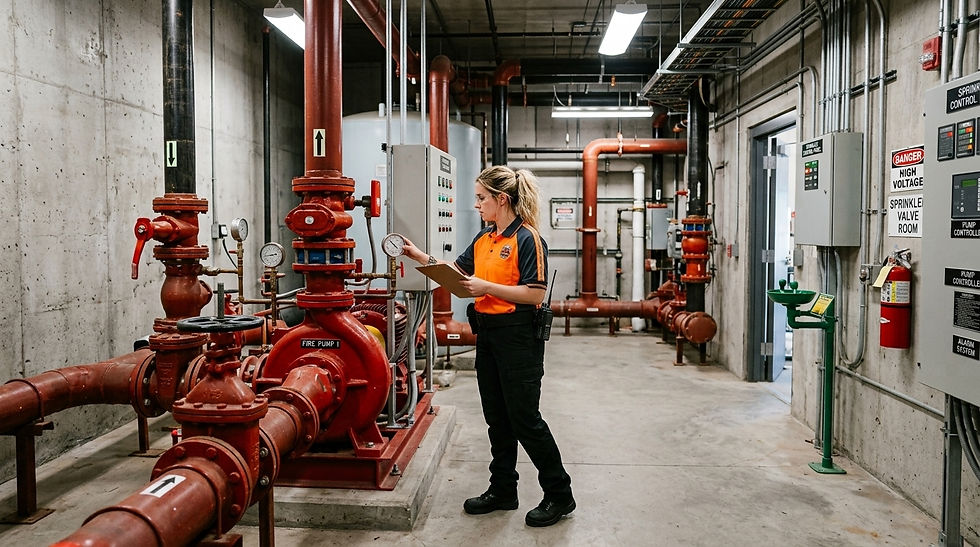
What a compliant fire watch usually includes
A fire watch is more than putting a person near the front door. The AHJ expects a clear plan, trained people, reliable communication, and written proof that patrols happened.
Some details vary by location and occupancy, but a proper fire watch usually includes these core elements.
Trained personnel who understand the assignment
Fire watch personnel must know what they are watching for and what to do if they find a problem. They do not replace firefighters. Their job is early detection, immediate reporting, occupant warning, and hazard awareness.
A fire watch person should know:
The areas that must be patrolled
The reason the fire watch is in place
How to contact 911 quickly
How to notify building occupants
Where exits are located
Where fire extinguishers are located
Which areas have higher fire risk
Who to contact for property management or maintenance issues
Some properties use trained employees. Others hire a fire watch provider. If an outside company is used in Florida, property owners should confirm that the company carries proper insurance, understands local fire watch procedures, and can provide documentation accepted by the AHJ.
Continuous or regular patrols
The type of patrol depends on the building and the fire official’s instructions. Some situations require continuous watch in a specific area. Others require recurring patrols throughout affected spaces.
Patrol routes may include:
Corridors
Mechanical rooms
Electrical rooms
Fire alarm panels
Sprinkler risers
Storage rooms
Kitchens
Laundry rooms
Parking garages
Stairwells
Construction areas
Exterior fire lanes
In a large hotel, condo tower, school, or shopping center, one person may not be enough. The AHJ may require multiple people so every affected area can be checked at the required interval.
A written fire watch log
The log is one of the most important parts of a fire watch. It proves that the watch happened and shows how the building was monitored.
A good fire watch log should include:
Property name and address
Date and time fire watch began
Reason for the fire watch
Areas being patrolled
Name of each person on duty
Patrol times
Problems found
Corrective actions taken
Emergency calls or notifications
Time the system was restored
Approval to end fire watch, when required
The local fire official may ask to review the log during or after the impairment. A missing or incomplete log can create problems even if someone was physically present.
Clear emergency procedures
Fire watch personnel need a simple plan for what happens if they see smoke, smell burning, hear an alarm, find a blocked exit, or discover a fire.
That plan should include:
Call 911 immediately
Alert occupants using the approved method
Start evacuation if needed
Notify property management
Guide first responders to the hazard if safe
Do not silence alarms or reset panels without approval
Do not fight fire unless it is small, escape is clear, and the person is trained
The watch should also know what not to do. They should not perform unrelated maintenance, security rounds, janitorial work, or guest services if those duties distract from fire safety.
What Bay County and Walton County properties should expect
Bay County and Walton County share many fire watch concerns with the rest of Florida, but local conditions can make planning more urgent.
Both counties include coastal communities, vacation rentals, high-occupancy condos, restaurants, mixed-use buildings, schools, churches, and active construction. Seasonal tourism can increase building occupancy. Storm damage and repair work can also increase fire protection impairments.
Coastal buildings and high-occupancy properties
Condominiums, hotels, and resort properties often have complex fire protection systems. A single impairment can affect many floors, units, or common areas.
For example, if a fire alarm panel in a condominium loses monitoring, the fire official may require fire watch until monitoring is restored. If a sprinkler riser serving several floors is shut down, the required fire watch may need to cover each affected floor and common area.
Property managers should be ready to answer:
Which system is impaired?
Which areas are affected?
Are occupants staying in the building?
How will occupants be notified in an emergency?
Who is conducting the watch?
How often will patrols occur?
When will repairs be completed?
Who will confirm the system is back in service?
Clear answers help the AHJ make a decision and may reduce delays.
Restaurants and commercial kitchens
Restaurants face fire risk from cooking equipment, hood systems, grease buildup, electrical equipment, and high daily use. If a fire suppression system, alarm connection, hood system, or related protection is impaired, operations may be limited or stopped until the hazard is corrected.
A fire watch does not automatically allow a restaurant to keep cooking. The AHJ may allow partial operation, restrict certain equipment, or require closure until protection is restored.
Construction and storm repair projects
Bay County and Walton County see frequent renovation, roofing, remodeling, and storm repair activity. Those projects can involve hot work, temporary electrical service, exposed framing, blocked exits, or disabled fire systems.
Contractors should coordinate fire watch needs before work begins. Waiting until a system is already offline can lead to failed inspections, work stoppages, or unsafe conditions.

How to set up and end a fire watch the right way
When a fire watch is needed, the best approach is direct and documented. Guessing can lead to noncompliance.
Use these steps as a practical guide.
Notify the proper fire authority
Contact the local fire prevention office or dispatch channel specified by the jurisdiction. Explain what system is impaired, why it is impaired, what areas are affected, and how long repairs are expected to take.
For planned work, notify the AHJ before disabling the system. For unexpected failures, notify them as soon as the issue is known.
Identify the affected area
A fire watch should match the impairment. If only one small area is affected, the watch may be limited. If the impairment affects the whole building, the watch may need to cover the whole building.
Do not assume the affected area is small. Fire alarm panels, sprinkler zones, standpipes, water supplies, and fire pumps can serve larger areas than expected.
Assign enough trained people
The number of fire watch personnel depends on building size, layout, occupancy, risk level, and patrol frequency. A single person may be enough for a small building. A large resort, school, hospital wing, or multi-building campus may need several people.
The AHJ can require more coverage if the proposed plan does not provide reasonable protection.
Keep logs from the start
Start the log when the impairment begins, not later in the day. Logs should be readable, complete, and available for review.
If shifts change, the log should show who took over and when. If a problem is found, write down what happened and how it was handled.
Repair the system as soon as possible
A fire watch is temporary. The owner or responsible party must move quickly to restore the fire protection system.
That may mean calling a licensed fire alarm contractor, sprinkler contractor, monitoring company, plumber, electrician, or other qualified service provider. Keep repair records and inspection reports. The AHJ may ask for proof that the system has been tested and returned to normal.
Get approval before stopping fire watch
Do not end the fire watch just because a contractor says the repair is finished. The local AHJ may require notification, documentation, system testing, or inspection before the fire watch can stop.
At minimum, the property should confirm:
The impaired system has been restored
Required testing is complete
Monitoring is active, if applicable
The fire official has been notified
The fire watch log is complete
Any required approval to end has been received
This final step matters. Ending fire watch too early can leave the property exposed and may violate local requirements.

The main takeaway for Florida property owners
Fire watch requirements in Florida are built around one simple idea: if a required fire protection system is impaired or a special fire hazard exists, people still need protection.
For Bay County and Walton County properties, the safest path is to treat fire watch as a formal code compliance measure, not an informal favor. Contact the local AHJ early, document every patrol, use trained personnel, repair the impaired system quickly, and do not stop the watch until the proper authority allows it.
This article is informational only and is not legal advice. For a specific building, project, or impairment, the local fire official has the final say.

Emerald Coast Security Agency
(Fire Sentry Operations)
309 Richard Jackson Blvd.
Suite 214
Panama City Beach, Florida 32407
(850) 888-6060
FLDACS B3300007

Comments